
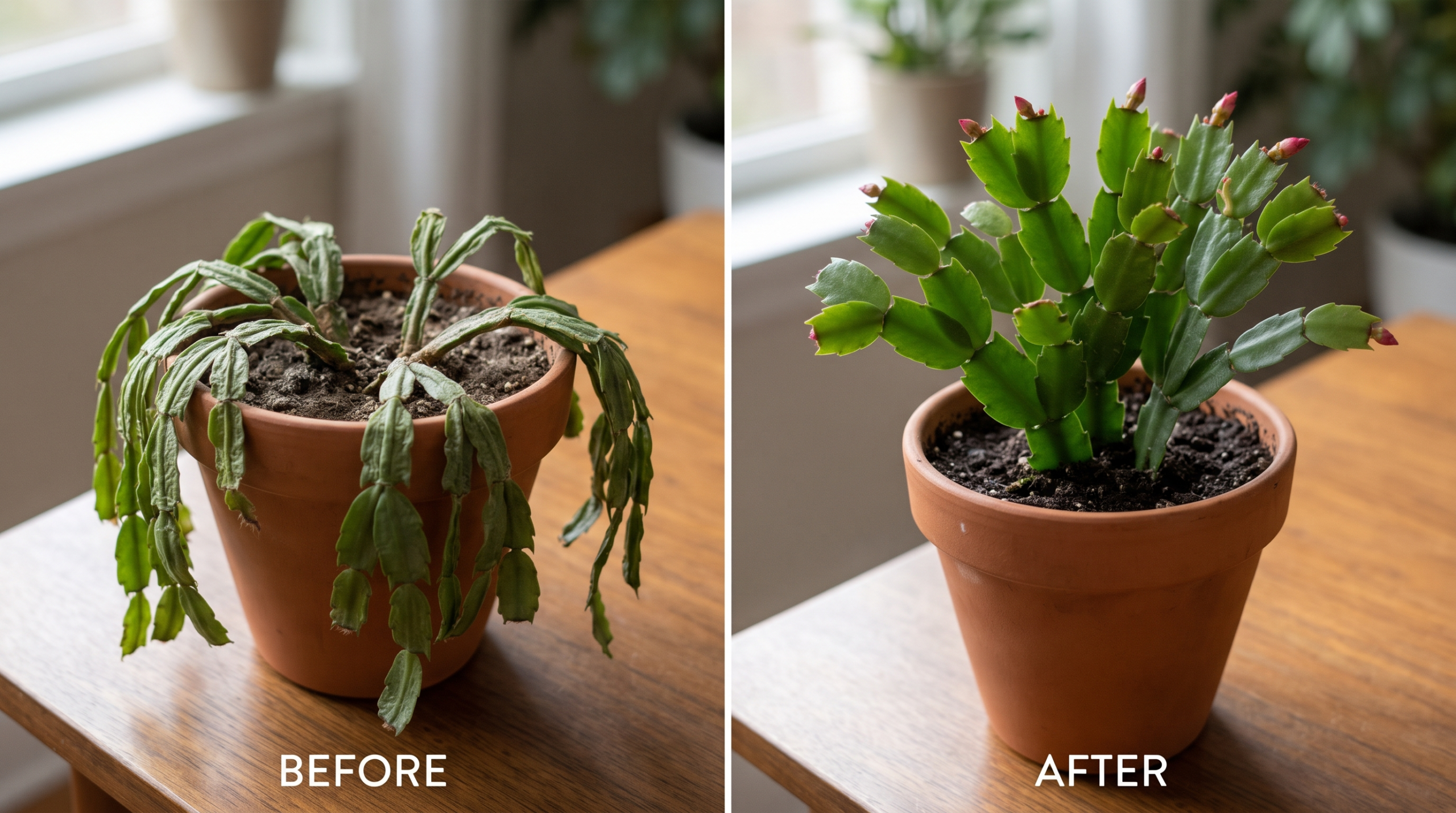
Few things are more discouraging for a houseplant lover than walking past a prized Christmas cactus (Schlumbergera) only to notice its once-plump, vibrant green segments looking flat, wrinkled, and droopy.
Unlike traditional desert cacti that thrive on neglect and bone-dry soil, the Christmas cactus is a tropical epiphyte native to the humid coastal mountains of Brazil. Because its natural habitat is vastly different from a dry desert, its care requirements are unique—and when something goes wrong, its segmented stems (called cladodes) are the first to show stress.
The good news is that a limp Christmas cactus is rarely beyond saving. In most cases, drooping leaves are a clear signal of a moisture, root, or environmental imbalance that you can correct within days. Below, you will find the 7 most common reasons your Christmas cactus leaves are limp and the exact steps to bring them back to life.
1. Underwatering and Severe Dehydration
Because “cactus” is in its name, many plant owners hesitate to water their Christmas cactus regularly. However, prolonged dryness causes the plant to draw stored moisture out of its stems, leaving them thin, limp, and noticeably wrinkled.
How to Confirm It
- The potting soil feels completely dry and pulls away from the edges of the pot.
- The pot feels unusually lightweight when lifted.
- The stem segments feel leathery or thin rather than firm and plump.
How to Fix It
Give your plant a thorough soak. Place the pot in a sink or basin and water slowly until liquid flows freely out of the drainage holes. Let it drain for 15 to 20 minutes so no excess water remains trapped at the bottom. Going forward, check the soil weekly and water whenever the top 1 to 2 inches feel dry to the touch.
2. Overwatering and Early Root Rot
Paradoxically, overwatering produces almost the exact same visual symptoms as underwatering. When roots sit in soggy, oxygen-starved soil, they begin to rot. Damaged roots can no longer absorb water, causing the leaves above to wilt and droop even though the soil is wet.
How to Confirm It
- The soil remains damp days after watering or gives off a sour, musty odor.
- Lower segments near the soil line feel soft, mushy, or look translucent or yellowish.
- Stems easily detach at the joints when touched.
How to Fix It
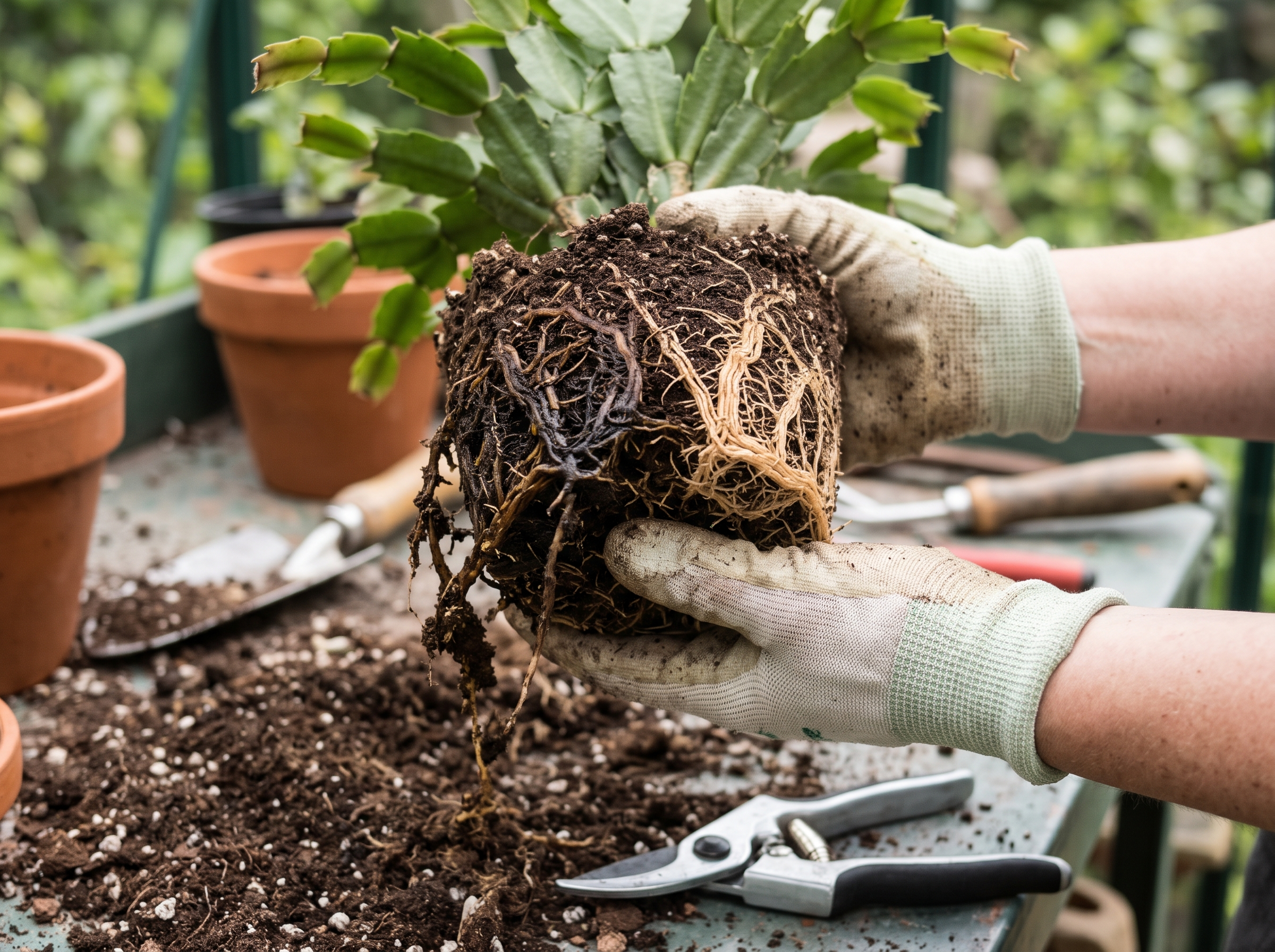
- Gently slide the plant out of its pot and inspect the root ball.
- Healthy roots are firm and white or light tan; rotten roots are dark brown, black, and slimy.
- Use clean, sterilized scissors to trim away all mushy roots.
- Repot the plant into a clean container with fresh, fast-draining potting mix, and wait 4 to 5 days before watering lightly.
3. Dense, Poorly Draining Soil or a Pot Without Holes
Even if your watering schedule is spot-on, heavy garden soil or a decorative cachepot without drainage holes will trap moisture around the roots. Christmas cacti grow on tree branches in the wild and need plenty of airflow around their root zone.
How to Fix It
Always plant your Christmas cactus in a container with at least one generous drainage hole. If your current soil looks compacted or stays wet too long, refresh it using a loose, airy blend:
- 2 parts standard peat-free houseplant potting soil
- 1 part perlite or pumice (for aeration)
- 1 part fine orchid bark (to mimic its natural epiphytic environment)
4. Too Much Direct Sunlight
While Christmas cacti love bright light, harsh afternoon sun through a south- or west-facing window can overheat the plant and strip moisture from its segments faster than the roots can replace it.
How to Confirm It
- Leaves droop noticeably during the hottest part of the afternoon and perk up slightly at night.
- Segments develop a reddish, purplish, or bleached yellow tint (a classic sign of light stress).
How to Fix It
Move your plant a few feet back from sunny windows or place it near an east- or north-facing window where it receives bright, filtered, indirect light throughout the day.
5. Dry Indoor Air and Heat Stress
During fall and winter, indoor heating systems dramatically drop household humidity. Placing a Christmas cactus near a radiator, heating vent, fireplace, or drafty doorway dries out the thin stem segments rapidly.
How to Fix It
- Keep the plant at least 3 to 4 feet away from heat vents and cold drafts.
- Maintain comfortable room temperatures between 60°F and 70°F (15°C–21°C).
- Boost local humidity to 50–60% by setting the pot on a shallow pebble tray filled with water (making sure the pot bottom sits above the water line) or running a small room humidifier nearby.
6. Being Severely Rootbound
Christmas cacti actually bloom best when slightly snug in their pots, so they do not need frequent repotting. However, if a plant has been in the same container for four or five years, the roots can become so tightly coiled that very little soil remains to hold water. When you water, liquid runs straight down the sides without hydrating the root ball.
How to Fix It
Check the drainage holes for emerging roots. If the plant is severely rootbound, repot it in spring (after blooming finishes) into a container that is just 1 to 2 inches wider than the current pot.
7. Post-Bloom Exhaustion
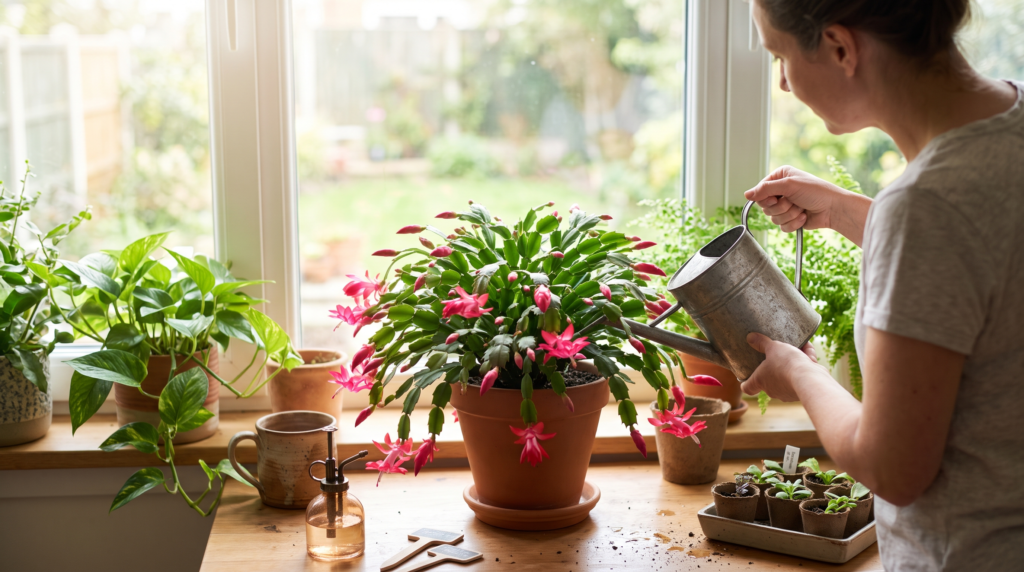
Producing dozens of vibrant flowers takes an enormous amount of energy. It is completely normal for a Christmas cactus to look slightly tired, limp, or droopy right after a heavy winter bloom cycle finishes.
How to Fix It
- Gently twist off any faded flowers and spent seed pods so the plant stops directing energy toward them.
- Resume regular watering whenever the top inch of soil dries out.
- Once new green growth appears in spring, feed once a month with a balanced liquid houseplant fertilizer diluted to half strength through late summer.
Quick Diagnostic Checklist: Dry vs. Overwatered
| Symptom | Underwatering | Overwatering / Root Rot |
|---|---|---|
| Soil Feel | Bone-dry, dusty, pulling from pot edges | Wet, soggy, or heavy days after watering |
| Leaf Texture | Thin, flat, wrinkled, leathery | Soft, limp, mushy near the base |
| Leaf Color | Dull green | Pale, yellowing, or translucent |
| Immediate Action | Deep soak and drain thoroughly | Inspect roots, trim rot, repot in fresh mix |
Frequently Asked Questions
How long does it take for limp Christmas cactus leaves to perk back up?
If the limpness is caused by simple dehydration or too much sun, your plant will typically regain its firmness within 2 to 5 days after a thorough watering and relocation to indirect light. Recovery from root rot takes longer—usually 2 to 4 weeks while the plant establishes new roots.
Should I cut off limp leaves on my Christmas cactus?
Do not rush to prune drooping segments unless they are mushy, black, or rotting. Wrinkled stems caused by underwatering will usually plump back up once hydrated. However, if a healthy stem breaks off during repotting, let the cut end dry for 24 to 48 hours and plant it in damp potting mix to propagate a brand-new cactus.
Can a Christmas cactus recover from root rot?
Yes. As long as some firm, healthy white roots—or even healthy upper stem segments—remain intact, you can trim away the rotted sections, repot into fresh, well-draining soil, or propagate healthy cuttings to save the plant.