
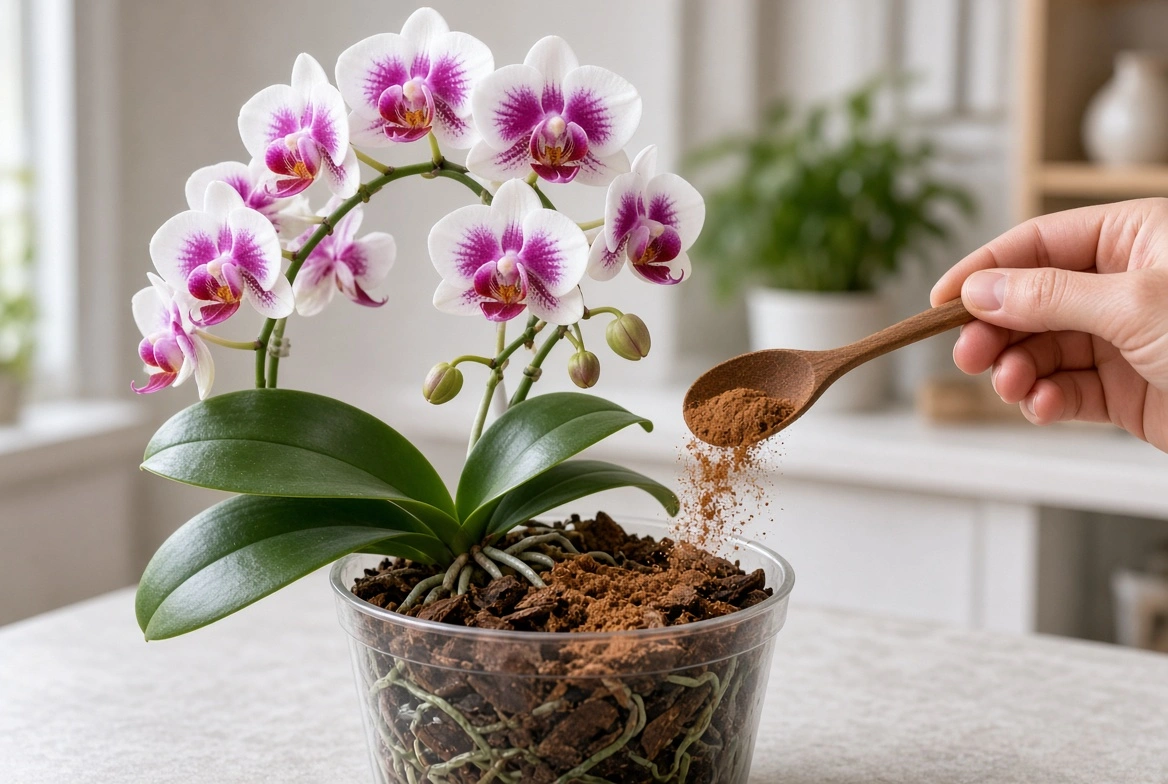
Orchids—especially Phalaenopsis—are among the most popular indoor plants for home décor. They look delicate, but they are not impossible to grow. Most problems come from excess moisture, poor airflow, a tired potting mix, and inconsistent orchid fertilizer—not from a “mystery” the plant refuses to share.
A simple kitchen staple many growers use on the surface of the mix is ground cinnamon. It is not a miracle bloom booster and it will not replace light, watering discipline, or a proper orchid mix. Used correctly, it can support a cleaner potting surface, help with mild fungal pressure, and form part of a low-cost indoor plant care routine.
This guide explains what cinnamon can realistically do, how to apply about 1 teaspoon, and the care steps that actually drive reblooming.
Why Indoor Orchids Stall, Get Mold, or Stop Flowering
Wild orchids are epiphytes. They cling to trees, dry quickly after rain, and take nutrients from air, water, and decaying matter. In a home pot, the opposite often happens: the mix stays wet, humidity sits still, and roots suffocate.
Common causes of weak growth and fewer flowers:
- Overwatering and poor drainage
- Dense or decomposed bark that holds water
- Low light or no seasonal light change
- Salt buildup from heavy plant fertilizer
- Stagnant air that invites mold and pests
- Root rot that cuts off water and nutrient uptake
If roots are damaged, the plant spends energy surviving instead of producing spikes. That is why root health, potting mix, and indoor humidity control matter more than any single sprinkle of spice.
What Cinnamon Can Do for Orchids (and What It Cannot)
Cinnamon contains cinnamaldehyde, a compound studied for antifungal and antibacterial activity. Gardeners use a thin layer of ground cinnamon as a household, chemical-light option for:
- Surface mold prevention on bark, sphagnum, and the crown area
- Mild support against fungal spotting after trimming or repotting
- A scent some crawling pests dislike, as a small extra layer of pest control—not a replacement for inspection
- A cleaner-looking mix while you correct watering and airflow
What cinnamon will not do:
- Guarantee “5 times more flowers” or non-stop blooming
- Cure advanced root rot
- Replace orchid fertilizer, grow lights, or a fresh potting mix
- Act as a registered fungicide or pesticide
Keep claims modest. Healthy roots, bright indirect light, and a dry-out cycle between waterings are still the main drivers of rebloom.
How to Use 1 Teaspoon of Cinnamon in the Orchid Pot
Use plain ground cinnamon, not cinnamon oil, cinnamon extract, or sugar-cinnamon blends.
- Check the plant first. If the crown is mushy, leaves are collapsing, or roots are black and hollow, treat root rot and consider repotting before adding anything to the surface.
- Choose timing. Best after watering has drained, after a light trim, or during repotting into fresh bark.
- Apply a thin layer. Sprinkle about 1 teaspoon evenly over the top of the mix. Do not pack it into the crown or bury it in a wet clump.
- Water as usual—then wait. Orchids prefer a moist-then-dry rhythm. Cinnamon sits on the surface; it is not a reason to keep the pot soaked.
- Repeat sparingly. Reapply a light dusting every few weeks if the surface looks tired, not after every watering.
If you see crust, mold returning quickly, or fungus gnats, the real issue is usually the mix, drainage holes, or a watering schedule—not a missing spice.
The Care Stack That Actually Increases Blooms
Cinnamon is an accessory. Use it with a complete orchid care setup:
Light
Give bright, indirect light. A south or east window often works. In darker rooms, a full-spectrum grow light on a timer is one of the highest-impact home upgrades for indoor orchids.
Water and drainage
Water thoroughly, then let excess run out. Never leave the pot in a saucer of standing water. Use a clear pot with slots if you want to monitor roots.
Potting mix
Refresh bark-based orchid potting mix when it breaks down. Old mix holds water, raises mold risk, and invites root rot.
Fertilizer
Use a balanced orchid fertilizer at weak strength (“weakly, weekly” during active growth). Rinse the mix with plain water occasionally to limit salt buildup. Overfeeding burns roots and can stall flowers.
Humidity and air
Most homes are dry in winter and stuffy in summer. A small humidifier, a pebble tray, and gentle air circulation help. Good airflow is also basic mold prevention for both the plant and the room. If windows fog and pots stay wet, a dehumidifier in that space can protect plants and indoor air quality.
Temperature
Many Phalaenopsis plants set spikes after a modest night-temperature drop. Stable comfort for people is usually close to what the plant likes; sudden cold drafts are not.
Mold, Root Rot, and Home Moisture: Keep the Problem Small
Surface fuzz on bark is common when the mix stays damp. A pinch of cinnamon may slow light surface growth. Persistent mold means you should:
- Increase drying time between waterings
- Improve ventilation
- Repot into chunky bark
- Remove dead roots with sterile tools
- Keep water out of the crown
This is plant care, not a substitute for professional mold removal or home moisture repairs if walls, windows, or bathrooms are involved. Fixing leaks and humidity protects the home environment and makes indoor gardening easier.
For pests (mealybugs, scale, fungus gnats), isolate the plant, wipe leaves, and use an appropriate indoor plant treatment. Cinnamon is at most a minor deterrent.
Cost-Effective Routine vs. Constant Replacement
Replacing a blooming orchid every few months is more expensive than a basic care kit: bark mix, a clear pot, diluted fertilizer, and optional grow light or humidifier. A jar of cinnamon lasts many applications and fits an eco-friendly, low-chemical routine—as long as you treat it as a supplement, not a cure-all.
Quick FAQ
Can I mix cinnamon into the potting medium?
A light surface application is enough. Mixing large amounts into wet media can cake and does not replace fresh bark.
Is cinnamon safe for all orchids?
It is widely used on Phalaenopsis and similar house orchids. Avoid oils and keep powder out of the crown.
How long until I see more flowers?
A healthy plant may take weeks to months to set a new spike. There is no reliable “non-stop bloom” switch.
Should I stop using orchid fertilizer?
No. Cinnamon is not plant food. Keep a gentle fertilizer schedule during growth.
Bottom Line
One teaspoon of ground cinnamon in the pot is a simple, inexpensive extra for mold prevention, a cleaner mix surface, and modest support around cuts and damp bark. Pair it with the fundamentals: light, drainage, fresh potting mix, measured orchid fertilizer, airflow, and sensible indoor humidity.
That combination—not a miracle spoonful—gives orchids the best chance to stay healthier and produce more reliable rebloom cycles in a normal home.
This article is general houseplant information, not a guarantee of bloom count or a substitute for product labels or local gardening advice. Results vary by variety, light, and watering habits.