
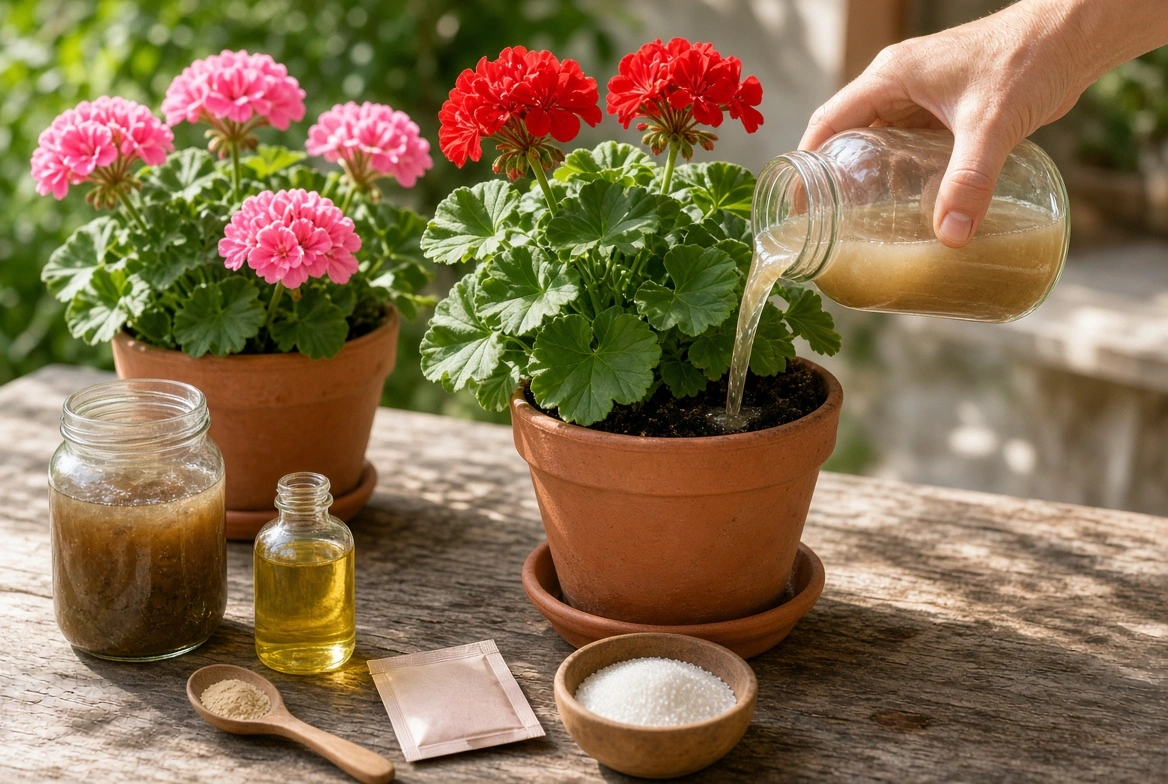
Geraniums (Pelargonium) are among the most reliable flowering plants for balconies, windowsills, and patio containers. They reward consistent light, well-draining potting mix, and a steady but light feeding routine. When leaves fade, stems go leggy, or buds stay scarce, the cause is usually weak nutrition, compacted soil, or irregular watering—not a plant that “gave up.”
A homemade liquid mix some home gardeners use between spring and early autumn combines water, a pinch of dry yeast, a little sugar, and a teaspoon of castor oil. It is not a certified plant fertilizer and it will not replace sunlight, drainage, or deadheading. Used as a supplement every two weeks, it can support soil microbes and give container geraniums a modest extra boost.
Recipe: Geranium Revival Mix
Ingredients
- 1 liter room-temperature water
- 1 teaspoon castor oil
- 1 gram dry yeast (a small pinch)
- 1 teaspoon sugar
How to mix it
- Dissolve the yeast and sugar in 100 ml of warm—not hot—water.
- Let the mixture sit 10–15 minutes, until it looks foamy.
- Pour that starter into the remaining 900 ml of water.
- Add 1 teaspoon of castor oil and shake or stir until the oil is broken up as much as possible.
Use the mix fresh. Do not store it for days; fermentation continues and the smell and strength change.
How to Apply It
- Feed once every 2 weeks from spring through early autumn.
- Pour 100–150 ml per plant onto the soil, never onto leaves or flowers.
- If the potting mix is very dry, water lightly first so the liquid spreads instead of running straight through.
- Skip feeding in winter rest, in heat stress, or when the plant is freshly repotted and still settling.
This is a weak homemade drench, not a concentrated chemical fertilizer. More is not better. Overuse can leave an oily film on the mix and stress roots.
What You May Notice
Results vary by light, pot size, and variety. Growers who keep the basics right often report:
- Deeper green foliage
- More buds on healthy stems
- Slightly faster summer growth
- A bushier shape when feeding is paired with pruning
If nothing changes after a few weeks, check light and root health before adding more homemade mixes.
Why Gardeners Use These Ingredients
Keep the explanation honest:
- Yeast can feed soil microbes and add a small amount of B vitamins and fermentation byproducts. Calling it “natural growth hormones” oversells what a pinch in a liter of water can do.
- Sugar is energy for microbes in the potting mix. Used in tiny amounts, it is a microbial snack—not plant food on its own. Too much sugar can encourage slime or fungus gnats.
- Castor oil is a folk root-and-bloom additive in some home recipes. Evidence is mostly anecdotal. Keep it off foliage and use only a teaspoon per liter.
A commercial geranium fertilizer or balanced liquid feed still gives more predictable NPK. This mix works best as a low-cost extra, not the only nutrition plan.
Growing Conditions That Actually Increase Blooms
Homemade fertilizer cannot fix a dark corner or soggy pot.
Light. Geraniums want 5–6 hours of morning sun or bright indoor light. In low-light rooms, a simple grow light on a timer is often the highest-impact upgrade.
Soil and drainage. Use a well-draining potting mix with perlite or bark. Standing water leads to root rot, yellow leaves, and fewer flowers.
Water. Let the top of the mix dry slightly between waterings. Dry-then-wet is better than a constantly damp pot.
Deadhead and trim. Remove faded blooms to encourage new clusters. Cut leggy stems so the plant stays compact and produces more flowering shoots.
Airflow and pests. Good ventilation reduces mildew and makes basic pest control easier. Check the undersides of leaves for whitefly and aphids, common on balcony geraniums.
Container choice. Drainage holes are non-negotiable. A pretty pot without holes is a common reason “revival” mixes fail.
Notes
- This recipe is general home-gardening information, not a guaranteed bloom formula.
- Do not apply castor oil to leaves, petals, pets’ areas, or indoor surfaces where it can stain.
- Keep yeast mixes away from children and do not drink them.
- If leaves burn, growth stalls, or fungus appears on the mix, stop the drench, flush the pot with clean water, and return to a standard weak fertilizer.
Quick FAQ
Can I use this on other flowering plants?
Some gardeners try it on other container bloomers. Start with a smaller dose and watch the soil surface.
Can I spray it on the leaves?
No. Keep it in the soil only.
Is this better than store-bought fertilizer?
Not necessarily. Packaged feeds have labeled nutrients. This mix is inexpensive and gentle when used rarely.
How do I get a rounder plant?
Pinch tips, deadhead often, give morning sun, and avoid high-nitrogen feeds that push leaves instead of flowers.
Bottom Line
The Geranium Revival Mix is a simple homemade drench: yeast, sugar, castor oil, and water, applied to the soil every two weeks in the growing season. Pair it with morning light, well-draining potting mix, deadheading, and careful watering. That combination—not a single kitchen recipe—gives geraniums the best chance of greener leaves, more buds, and a fuller shape.
General houseplant guidance only. Results vary. Adjust feeding if your local climate, pot size, or variety differs.